What is Discrete Element Modeling?
Definition and Core Concepts
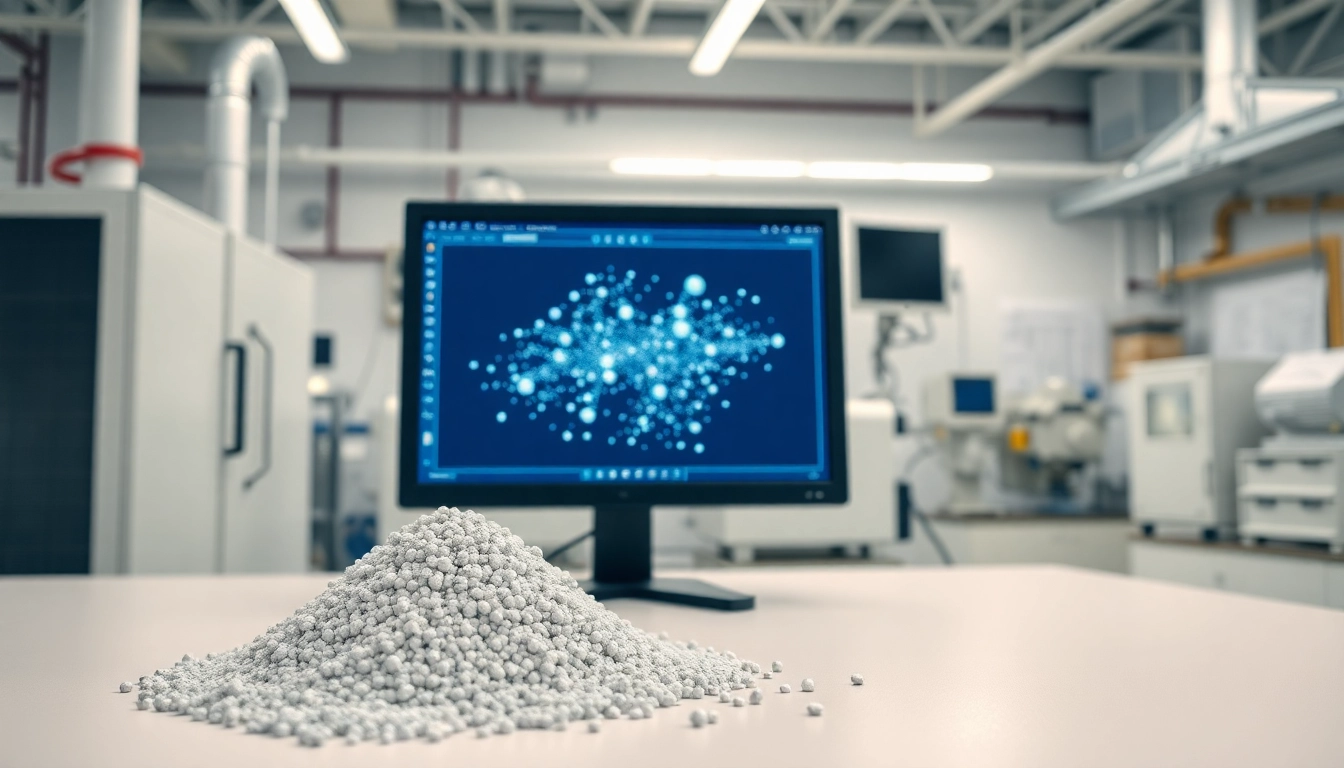
Discrete Element Modeling (DEM) is a powerful computational technique used to simulate the behavior of systems composed of distinct particles. Unlike continuum modeling, which treats materials as continuous entities, DEM analyzes individual particles and their interactions. This method is highly effective in industries dealing with bulk materials, such as mining, pharmaceuticals, and civil engineering. The essence of DEM lies in its ability to capture the complexities of particle dynamics, including contact forces, movement, and overall system behavior.
History and Development of DEM
The roots of Discrete Element Modeling can be traced back to the 1970s when researchers aimed to address challenges in simulating granular materials. Over the years, DEM has evolved dramatically thanks to advancements in computational power, numerical algorithms, and software development. Initial models focused on two-dimensional scenarios, but today, three-dimensional simulations are widely used, providing a more accurate depiction of real-world conditions.
Applications in Various Industries
The applications of Discrete Element Modeling are vast and varied. In the Discrete Element Modeling framework, industries leverage DEM for tasks such as:
- Mining: To optimize the extraction process by analyzing the flow of bulk materials.
- Civil Engineering: In assessing soil behavior and stability in construction projects.
- Pharmaceuticals: For characterizing the flow behavior of powders during manufacturing.
- Food Industry: In simulating particle interactions for better processing and packaging.
How Discrete Element Modeling Works
Fundamental Principles of Particle Interactions
The core of DEM is based on the physics of particle interactions. Each particle is treated as an individual entity with specific physical properties such as mass, shape, and size. The interactions between particles, including collisions and bonding, are calculated using defined contact laws. These laws dictate how particles behave when they come into contact, influenced by factors such as friction, elasticity, and cohesion.
Simulation Process and Software Tools
The simulation process of DEM begins by defining the particle attributes and initial conditions. The environment is set, outlining boundaries and external forces acting on the system. After setup, specialized software tools perform iterative calculations to model the particle movements and interactions over time. Popular software for DEM simulations includes OpenFOAM, EDEM, and PFC (Particle Flow Code). Users can analyze the results to gain insights into the dynamics of the modeled system.
Data Analysis in Discrete Element Modeling
Once simulations are complete, data analysis is crucial for extracting meaningful information. Typical analyses include evaluating the distribution of particle forces, tracking the movement patterns, and assessing the overall system behavior. This data can be visually represented through graphs and animations, helping engineers and researchers to understand material behaviors and optimize processes effectively.
Benefits of Using Discrete Element Modeling
Improving Efficiency in Material Handling
One of the primary advantages of Discrete Element Modeling is its ability to enhance efficiency in material handling. By simulating various scenarios, companies can identify bottlenecks and streamline operations. For instance, DEM can predict how materials will flow through chutes or pipelines, enabling the design of more effective transfer points and reducing downtime.
Enhancing Engineering Designs
DEM helps engineers refine their designs by predicting how materials will behave under different conditions. This capability allows for optimization of equipment and processes, resulting in more robust and reliable designs. For example, simulations can indicate the need for alterations in truck-loading systems or hoppers to facilitate better material flow.
Cost-Effectiveness in Projects
Utilizing Discrete Element Modeling can lead to significant cost savings in projects. By accurately simulating material behavior and optimizing designs before physical implementation, organizations can avoid costly mistakes. The iterative process of DEM allows for adjustments to be made virtually, minimizing resource wastage and improving project timelines.
Common Challenges with Discrete Element Modeling
Limitations of Current Technologies
Despite its strengths, Discrete Element Modeling faces limitations. The accuracy of simulations heavily relies on the quality of input data and the implemented contact models. Additionally, as systems become more complex, computational time and resources can increase significantly, potentially limiting the scope of simulations.
Complexity of Real-World Simulations
Real-world systems often involve a multitude of variables that can complicate DEM simulations. Factors such as environmental conditions, varying particle properties, and dynamic interactions can all affect the accuracy of results. As a result, creating comprehensive models that encapsulate these complexities remains a challenge for practitioners.
Overcoming Barriers in Data Accuracy
To overcome barriers in data accuracy, thorough calibration and validation of models against experimental data are essential. By constantly refining parameters and improving models based on real-world observations, the reliability of DEM simulations can be increased. Moreover, leveraging advancements in machine learning and artificial intelligence can aid in enhancing predictive capabilities.
The Future of Discrete Element Modeling
Emerging Trends in DEM Research
The future of Discrete Element Modeling is poised for growth as research continues to uncover new methodologies and applications. Emerging trends include the integration of DEM with machine learning algorithms, allowing for predictive modeling that adapts based on real-time data. Furthermore, advancements in computational techniques promise faster simulations, enabling larger and more complex systems to be modeled effectively.
Integration with Other Modeling Techniques
A significant trend in the field is the integration of Discrete Element Modeling with other computational techniques, such as Computational Fluid Dynamics (CFD). This synergy enables a more holistic view of systems where both particle dynamics and fluid behaviors are considered, enhancing the accuracy of predictions and optimizing processes effectively.
Predictions for Industry Advancements
As industries increasingly rely on data-driven decision-making, the role of Discrete Element Modeling is set to expand. Organizations that adopt DEM will likely see reduced operational costs, improved safety, and enhanced product quality. The continued evolution of this technology promises to provide innovative solutions that will shape the future of industries dealing with granular materials.
Frequently Asked Questions (FAQs)
What industries benefit from Discrete Element Modeling?
Industries like mining, pharmaceuticals, food processing, and civil engineering benefit significantly, utilizing DEM for optimizing processes and improving safety.
How does DEM differ from traditional modeling?
Unlike traditional continuum models, DEM focuses on individual particles and their interactions, providing detailed insights into bulk material behavior.
What are the main challenges in using DEM?
Main challenges include the computational intensity of simulations, accuracy of input data, and modeling real-world complexities effectively.
Is DEM suitable for large-scale simulations?
Yes, while DEM is computationally intensive, advancements in technology are making it increasingly feasible to perform large-scale simulations.
Can DEM be integrated with other methods?
Absolutely! DEM can be effectively integrated with methods like Computational Fluid Dynamics (CFD) for comprehensive analysis of systems involving both solid and fluid dynamics.